Brighton form guide
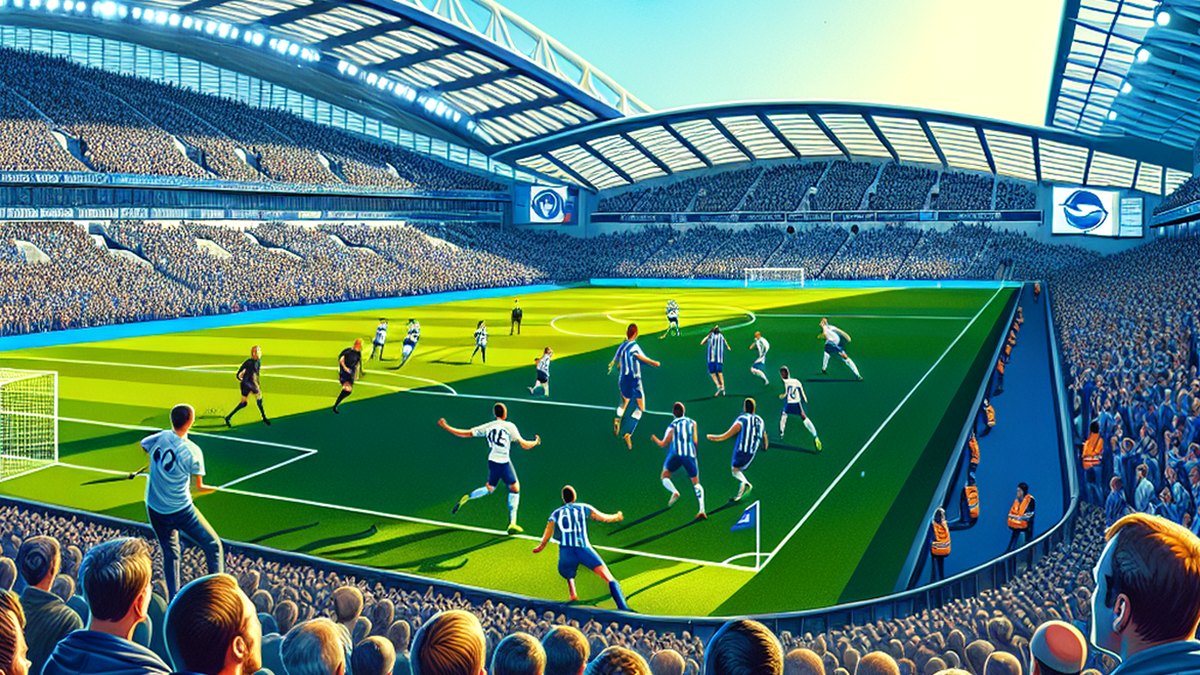
Brighton’s Blueprint: The Form Guide That Speaks Louder Than Stats You won’t crack Brighton’s pattern by staring at league tables; the brighton form guide tells a story of pressing symmetry, defensive transitions, and wing-play that flickers between sublime and suicidal. Look at their last five outings. A 3-0 thumping of West Ham?

Controlled, patient, xG of 2.1 to their 1.3. That’s not luck; that’s Roberto De Zerbi’s mid-block letting opponents wander into traps before his front three—usually Mitoma, Groß, and João Pedro—ignite the counter with 26.3 touches in the box per game.
But slice through the veneer: that same Brighton shipped two late winners (Burnley, Wolves xG 0.7 and 0.9 respectively) because their high press—PPRA of 12.3, joint-second highest in the league—collapses when the second ball drops to midfield and no one rotates. See Saturday’s loss to Spurs: Son and Kulusevski drifted onto Walker-Peters, sucking space behind, and Brighton’s defensive line practically invited them to tap in.
Ever wonder how to analyze the brighton form guide correctly without drowning in noise? Start with the half-spaces.
Under De Zerbi, the Seagulls work the zone between fullback and winger like artisans—Mitoma drifts diagonal, Groß glides into channels, and João Pedro ghosts between lines. Against Chelsea last month, their crosses into the channel came at 3.1 per game, but only 47% found a teammate because the Blues’ aerial dominance in defensive duels (67%) forced Brighton into hopeful balls.
The pattern? When the wing-play works Brighton look fluid as Guardiola’s City; when it stalls, they resemble a Sunday league team suddenly chasing shadows. Here’s a hard truth: Brighton’s midfield spine—Groß, Mac Allister, or Gilmour—dictates the form guide strategy Brighton absolutely relies on. Gross’s long-range passing (85% accuracy, but only 6.2 progressive carries per 90) gives them outlets, yet his sluggish recovery pace leaves gaps when the ball is lost.
Ever noticed how teams like Aston Villa target his blindside? Ball out of a tackle, Villa winger sprints onto the overlap, Groß spins—he’s too slow.
And when Gilmour slotted in against Brentford, Brighton’s expected threat plunged from 1.5xG to 0.9 because the Argentine’s body shape under pressure invited quick turnovers. Honestly, I’m not convinced De Zerbi’s trusts his squad depth here—Mac Allister’s injuries leave gaping holes in structure.
For best Brighton form guide tips for beginners, ignore the top-line results and track three metrics: pressing intensity in the first 10 minutes (their average PPDA drops to 9.1 in the opening stanza), defensive transitions within 15 seconds of losing the ball (60% of goals conceded come from possessions lasting under 15 seconds), and wing-cross accuracy. When all three align—like in the 4-0 win over Luton where their press triggered a turnover in the first five minutes leading to a Mitoma cross that João Pedro nodded in—you’re looking at a tactical masterclass. Fail any leg and the brighton form guide morphs into a warning: dangerous, but fragile.
If you’re hunting for a ruthless snapshot, plug the brighton form guide into the football predictions hub at sport.18811.online and watch how their manager’s obsession with verticality clashes against stubborn low blocks. The problem?
Brighton’s style demands rhythm; without it, they fracture. Every win feels like a masterpiece; every loss, a car crash.
Is this the year their tactics outrun their fragility?


